Popular Insights
The Gold Standard of Wellness: Why 6-Year-Old Korean Red Ginseng is a Must-Have for Your Premium Portfolio
The Best Place to Source Korean Products: Discover MadeInKorea.im
How to Find Reliable Korean Suppliers for Your Import Business
The Ultimate Guide to Sourcing Korean Products for Global Buyers
Why Korean Products Are in High Demand Worldwide
How to Import Korean Products: Step-by-Step Guide for Buyers
Introduction
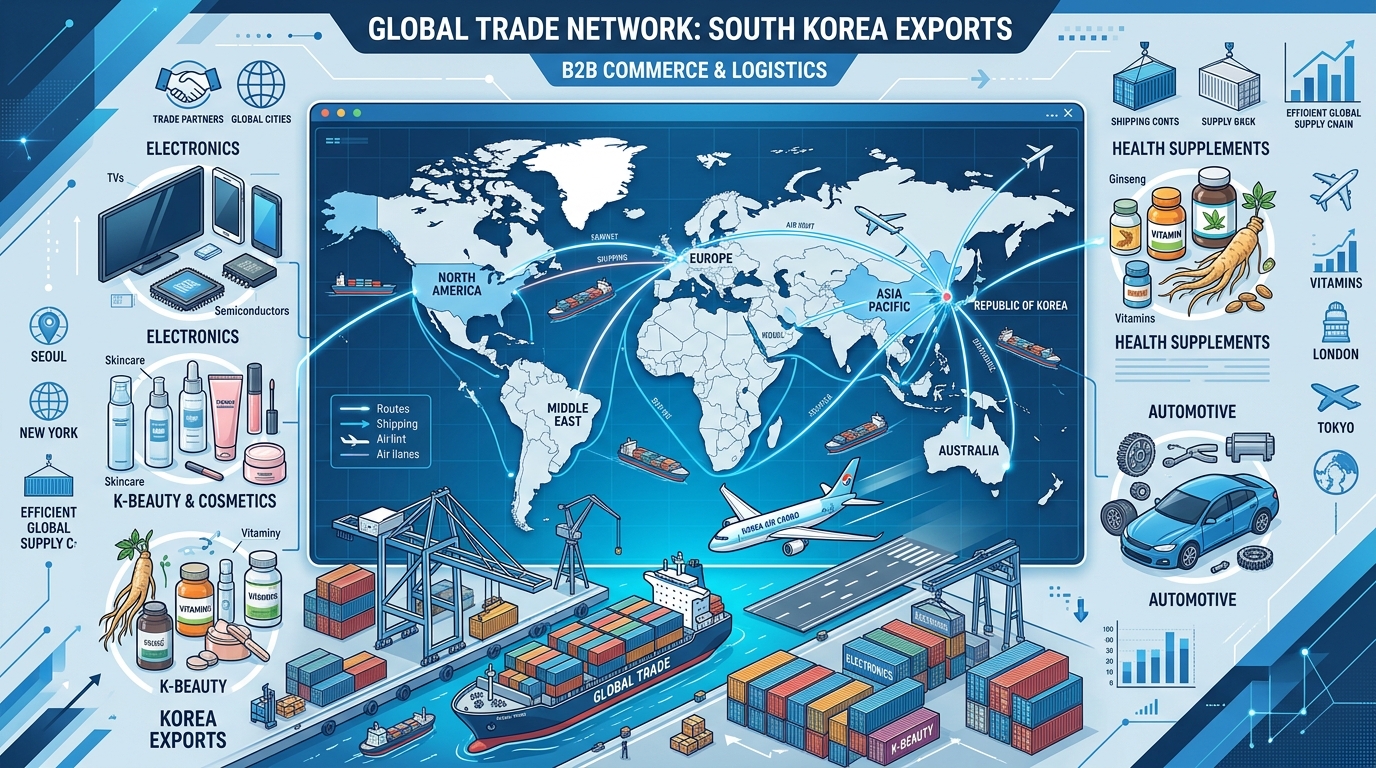
Korean products have earned a strong reputation in global markets for their quality, innovation, and reliability. From cosmetics and skincare to electronics, food products, health supplements, and lifestyle goods, Korean manufacturers have successfully built global demand across many industries. As a result, international buyers—including distributors, wholesalers, and e-commerce sellers—are increasingly looking to Korea as a strategic sourcing destination.
However, importing products from another country can seem complicated, especially for first-time buyers. Questions about supplier credibility, minimum order quantities, logistics, customs procedures, and product certifications often create uncertainty. Without a clear process, buyers may face delays, unexpected costs, or regulatory challenges.
The good news is that importing Korean products is relatively straightforward once you understand the key steps involved. Korea has a highly developed export infrastructure, experienced manufacturers, and strong government support for international trade. Many Korean companies are already familiar with working with global buyers and are prepared to meet international quality standards.
This guide explains the step-by-step process of importing Korean products successfully. Whether you are a retail buyer, distributor, or online seller, these steps will help you find reliable suppliers, negotiate effectively, and manage logistics with confidence. Platforms such as https://madeinkorea.im can also simplify the sourcing process by connecting global buyers with Korean manufacturers and export-ready suppliers.
1. Understanding the Global Demand for Korean Products
The first step in importing Korean products is understanding why they are so popular worldwide. Over the past two decades, Korea has become one of the most influential exporters in industries such as beauty, electronics, healthcare products, and food innovation. This global popularity is strongly influenced by the “Korean Wave,” also known as Hallyu, which includes K-pop, Korean dramas, Korean beauty trends, and Korean cuisine.
As Korean culture gained global recognition, consumers became more curious about Korean products. Korean cosmetics are known for advanced skincare technology and innovative ingredients. Korean electronics brands are widely respected for their engineering and design. Korean health products, such as red ginseng supplements, are valued for their long history in traditional wellness practices.
For global buyers, this growing demand creates a significant business opportunity. Retailers and distributors who import Korean products can benefit from strong consumer interest, competitive pricing, and unique product concepts. Additionally, many Korean manufacturers invest heavily in research and development, which helps them introduce new and innovative products to the market regularly.
Before beginning the import process, buyers should research which Korean product categories are trending in their local markets. By understanding consumer demand and identifying high-potential product categories, importers can build a more profitable and sustainable sourcing strategy.
2. Identifying the Right Korean Products to Import
Choosing the right product is one of the most important factors in building a successful import business. Korea produces a wide variety of export products, but not every product will perform equally well in every market. Careful product selection helps minimize risk and increases the chances of long-term success.
Some of the most popular Korean export categories include skincare and cosmetics, beauty devices, health supplements, packaged foods, beverages, fashion accessories, home appliances, and lifestyle products. These categories often perform well internationally because they combine strong branding with high product quality.
When selecting products to import, buyers should conduct market research to understand current trends, pricing structures, and customer preferences. Online marketplaces, retail reports, and consumer trend platforms can provide valuable insights into what products are gaining popularity.
Buyers should also consider factors such as product shelf life, shipping requirements, and regulatory compliance. For example, cosmetics and food products may require additional documentation or certifications depending on the importing country. Understanding these requirements early can prevent delays later in the import process.
By carefully evaluating market demand and product feasibility, buyers can identify Korean products that offer strong commercial potential in their local markets.
3. Finding Reliable Korean Suppliers
Once the right product category has been identified, the next step is finding trustworthy Korean suppliers. Supplier reliability is essential because it directly affects product quality, production timelines, and overall business reputation.
Korean manufacturers are generally known for their professionalism and high production standards, but buyers should still conduct proper due diligence before entering into a partnership. Reviewing company profiles, export experience, production capabilities, and existing certifications can provide a clearer picture of the supplier’s reliability.
Communication is also an important factor when evaluating potential suppliers. Reliable manufacturers respond quickly to inquiries, provide clear product specifications, and demonstrate transparency in pricing and production timelines. Buyers should not hesitate to ask detailed questions about manufacturing processes, quality control procedures, and packaging options.
In many cases, Korean suppliers are open to developing long-term partnerships with international buyers. Companies that regularly export products typically understand global market requirements and are better prepared to support overseas clients.
Using specialized sourcing platforms can make it easier to identify Korean suppliers that are actively looking for international business opportunities. These platforms allow buyers to review product catalogs, connect directly with manufacturers, and begin discussions with potential partners.
4. Requesting Product Samples and Quotations
Before placing a large order, buyers should always request product samples from potential suppliers. Product samples allow buyers to evaluate quality, packaging, functionality, and overall product presentation before committing to a purchase.
Testing samples also helps determine whether the product meets the expectations of the target market. For example, packaging design, labeling language, or product size may need adjustments depending on the buyer’s distribution channel or local market requirements.
When requesting quotations, buyers should provide clear details about the intended order quantity, packaging preferences, branding requirements, and delivery timelines. Providing accurate information allows suppliers to calculate precise pricing and production schedules.
It is also beneficial to request quotes from multiple suppliers. Comparing different offers can help buyers understand pricing variations and identify the best balance between cost, quality, and reliability.
Sampling and quotation comparison are critical steps that help minimize risk before committing to a full import order.
5. Understanding Minimum Order Quantity (MOQ)
Minimum Order Quantity, or MOQ, refers to the smallest quantity of products that a manufacturer is willing to produce in a single order. MOQs exist because manufacturing processes require certain production volumes to remain cost-efficient.
For new importers, MOQs can sometimes appear high, especially when dealing with established manufacturers. However, many Korean suppliers are open to negotiation, particularly when they see long-term potential in the buyer relationship.
Some manufacturers may offer reduced MOQs for first orders or allow mixed product orders to reach the minimum quantity requirement. This flexibility can help new buyers test products in the market without committing to excessively large inventory levels.
Buyers should carefully evaluate their expected sales volume before agreeing to an MOQ. Ordering too many units without clear demand can lead to storage costs and slow inventory turnover.
By discussing MOQ options openly with suppliers, buyers can often find a production arrangement that benefits both parties.
6. Checking Certifications and Compliance
Product certification is one of the most critical aspects of international trade. Each country has its own regulatory requirements that imported products must meet before they can be sold in the market.
For example, cosmetics may require ingredient documentation and safety reports, while food products may require health certifications and labeling compliance. Electronics products may need safety approvals depending on the importing country’s regulations.
Buyers should request certification documents directly from suppliers and verify whether those certifications are recognized in the destination market. In some cases, additional testing or registration may be required before products can be distributed locally.
Working with manufacturers that already have export experience can significantly simplify the certification process. These companies are often familiar with international compliance requirements and may already possess the necessary documentation for multiple markets.
Ensuring regulatory compliance before shipment helps prevent customs delays and protects the buyer’s business reputation.
7. Negotiating Pricing and Payment Terms
Pricing negotiations are a standard part of international sourcing. Korean manufacturers typically offer pricing structures based on production volume, customization requirements, packaging design, and shipping conditions.
Larger order quantities often result in lower unit prices because production costs can be distributed more efficiently. Buyers who plan long-term partnerships may also receive preferential pricing over time.
Payment terms vary depending on the supplier relationship. The most common payment method in international trade is bank transfer, often structured as a partial deposit followed by a final payment before shipment. Some transactions may use letters of credit for additional security.
Clear communication is essential during this stage. Buyers and suppliers should confirm all details in writing, including payment schedules, production timelines, and delivery conditions.
Transparent negotiations help establish trust and lay the foundation for a stable long-term business relationship.
8. Managing Shipping and Logistics
After production is completed, the next step is managing international shipping. Korean exports are typically transported via sea freight or air freight depending on shipment size, urgency, and product type.
Sea freight is generally more cost-effective for large shipments, while air freight offers faster delivery times for smaller or high-value goods. Buyers should evaluate both options based on cost, delivery schedule, and inventory requirements.
Understanding international shipping terms, commonly referred to as Incoterms, is also important. Terms such as FOB (Free on Board) and CIF (Cost, Insurance, and Freight) define which party is responsible for shipping costs, insurance, and logistics arrangements.
Many importers choose to work with freight forwarders who specialize in international logistics. These professionals manage transportation arrangements, documentation, and customs coordination.
Efficient logistics planning helps ensure that goods arrive on time and within the expected cost structure.
9. Customs Clearance and Import Documentation
Successful imports require proper documentation for customs clearance. Without the correct paperwork, shipments may be delayed or rejected by customs authorities.
Common documents required for international trade include the commercial invoice, packing list, bill of lading, and certificate of origin. Depending on the product category, additional certificates or inspection documents may also be required.
Import regulations vary between countries, so buyers should familiarize themselves with their local customs requirements before placing an order. Working with customs brokers can simplify the process by ensuring that all documentation is accurate and compliant.
Customs brokers also assist with calculating import duties, taxes, and regulatory fees. Understanding these costs in advance helps buyers determine the final landed cost of the products.
Accurate documentation and proper customs preparation are essential for smooth international trade operations.
10. Building Long-Term Partnerships with Korean Manufacturers
Successful importing is not just about completing a single transaction. The most profitable import businesses are built on strong long-term partnerships with reliable manufacturers.
When buyers maintain consistent communication and demonstrate reliability, suppliers are more likely to offer better pricing, priority production schedules, and access to new product developments. Over time, these relationships can evolve into exclusive distribution agreements or private label collaborations.
Visiting manufacturing facilities, attending international trade exhibitions, or conducting regular video meetings can strengthen trust between buyers and suppliers. These interactions also provide valuable insights into production capabilities and product development processes.
Korean manufacturers often value long-term partnerships with international buyers because stable relationships create predictable production schedules and market expansion opportunities.
By focusing on collaboration and trust, buyers can build sustainable import businesses and continuously expand their product portfolios with innovative Korean products.
Recommended Products
Discover related products from our store
![[Dr.BANGGIWON] Dandruff Shampoo EX](https://qbnqmnvgsgvjyqvugvfm.supabase.co/storage/v1/object/public/products/images/madeinkorea_a047e989da10_0.jpg)
[Dr.BANGGIWON] Dandruff Shampoo EX
Korea No.1 hair loss care shampoo brand Dr.BANGGIWON EX series. An advanced dandruff cleansing shampoo containing patented 3 Miracell Complex for deep scalp cleansing, dandruff removal, and hair loss prevention.
Unit Price
Contact for Price
MOQ
100 units
![[Dr.BANGGIWON] Dandruff Shampoo](https://qbnqmnvgsgvjyqvugvfm.supabase.co/storage/v1/object/public/products/images/madeinkorea_bb88c1255550_0.jpg)
[Dr.BANGGIWON] Dandruff Shampoo
A KFDA-certified functional shampoo designed to treat dandruff, soothe scalp itchiness, and alleviate hair loss symptoms in one step. Formulated with Salicylic Acid, Dexpanthenol, and Niacinamide for professional-grade scalp care.
Unit Price
Contact for Price
MOQ
100 units